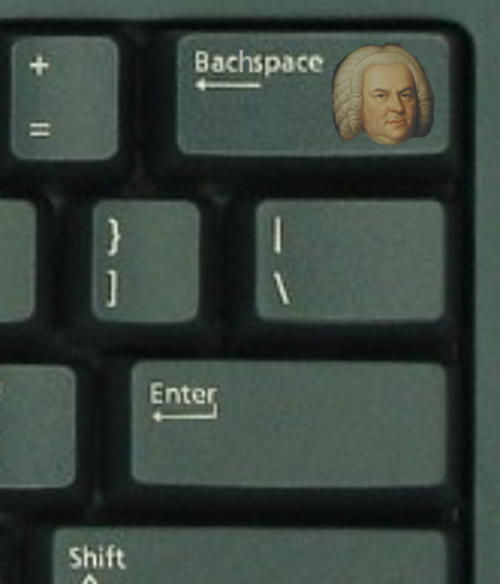
Recommended prerequisite: music theory (alternately, you can visit this maybe-useful post
Elements and Principles of Music)
All musicians ought to play Bach, whether for classical, contemporary, or pop. The best musicians have Bach for breakfast. Not only is the technique widely applicable, but his composition is also the epitome of well applied music theory.
Here is an amateur rendition of Violin Partita no. 2 in d minor: Allemande. Reading off a
PDF here, and worried about knocking the table. Even in monophony, harmony is established through chord outlining.
Part I
0:00 ~ 0:36 (establish d minor)
0:36 ~ 1:17 (transition to a minor, with a Picardy third)
Part II
1:21 ~ 1:53 (transition to g minor)
1:53 ~ 2:42 (return to d minor)
Even breaking down the harmonic movements this way, there are more complexities between each base. Most laypeople lose track and get "lost", and quickly bored. No worries, it is understandable. It takes some training to not get overwhelmed.
I like to think of fugues as "pure music". There is no lyrical, literary, nor occasional context attached to it. There is not even a title to give a clue. The beauty is in the movement of the piece itself, its tensions and resolutions between the voices, their overlapping and complementing. A modern person is more used to music packed with interesting melodies, but the
invention,
sinfonia, and
fugue utilize minimal starting material and expand it to its fullest potential.
Another great thing about Bach is the inspiration he gives to lame puns.
Here is a common frustration among keyboardists:
If you have no idea that was about, I introduce the
fugue. It is typically a musical form that harmonically elaborates on two themes with independent melodic lines. Bach was a master of the keyboard fugue. Is playing two simultaneous melodies too much for you? Is three? Here I play four in Fugue no. 7 in E flat major. That is two and a half fingers for each voice (Bach wrote a five part fugue too.. wonder how that works. Two fingers for each voice?).
0:01 first voice enters
0:11 second voice enters
0:22 third voice enters
0:34 fourth voice enters
0:52 two voices
0:57 four voices
1:06 three voices
1:31 four voices
If my rendition sounds a little too choppy for your taste, I can assure you that quirky articulation is better than none at all. Baroque highly valued originality in their performances where each playing would not have the exact same flow and embellishment.
There is a misconception that since little or no expressive details are specified on Baroque manuscripts, it means that they should be played mechanically. Actually, uniformness is so abhorred that it is common sense not to play that way, and therefore it is not specifically written. It was common knowledge to play with articulation, timbre, malleable tempo, and even improvisations.
The Art of Fugue is one of Bach's last works, which he left uncompleted due to his death. It contains fourteen fugues and four canons based on this one theme:
The fugue approach is much different from music after Mozart in that it varies the theme with many harmonies, whereas more modern music varies the harmony with many themes. I like to think that Bach's music is not so much about
what is being said, but rather
how something
can be said.
I do not have Bach for breakfast, which explains why I am not the best musician~