Followup of Harmonic Intervals and Resonance
Prerequisite: music theory, physics, algebra 2
Most of us are taught that Db and C# enharmonic, or are the same notes in different notation. Quite evidently, they share the same key on keyboards and same frets on guitars. I suppose it is convenient to assume that they are practically the same.
Except they are theoretically different, or microscopically different. A lot of instruments are tuned with perfect fifths, which is the traditional way to do it. Actually, this causes the enharmonic notes to misalign by tiny microtones.
This difference between enharmonic notes is a particular nuisance to fixed pitch instruments such as the piano and guitar. It causes certain chords and intervals to become significantly muddy and out of tune. To solve this problem the 12-TET (Tone Equal Temperament) was made, also known as 12-EDO (Equal Division of Octave).
12-T means that there are twelve distinct notes in the system, which in our current case helps to eliminate the distinction between enharmonic notes. The E means that the perceived relationship between each neighbouring tone is equal. The final T, for temperament, is the system of note pitches that an instrument assumes. Most of our music is in 12-TET .
In 12-TET, the relation between two semitones is the twelfth root of two. To clarify "twelfth root of two":
The number two comes from the fact that humans perceive pitch logarithmically. Two notes that are one octave apart, having a frequency ratio of 1: 2, sounds "the same".
The frequency in Hertz of a microtone within an equal temperament can be expressed as such:
where m is the order of the microtone, n is the number of distinct microtones in the octave, and ƒ is the fundamental frequency or reference note. Which means, one octave can have as many or less equal tones as you like. You can have 5-TET, 17-TET, 144-TET, or set two 143-TET microtones as one microtone. Experiment to your heart's desire! Microtones do not have to be a nuisance.
Some fascinating microtonal albums:
Brendan Byrnes - Micropangaea
Cryptic Ruse - Chains of Smoke
The microtone is not a modern concept. In fact it used to be the norm, especially with ancient folks having a keener sense of pitch. Some people have engineered microtonal instruments such as the microtonal guitar and fluid piano for traditional music. It helps to play maqamat where microtones are often used to sharpen or flatten "corners", or to build special modes. They are not equal temperaments, but tones microtones of varying sizes are involved.
Go to Xenharmonic for further reading~
Showing posts with label music. Show all posts
Saturday, 7 November 2015
Microtones
Internet Folk
Prerequisite: none
First note, singing in this very low key because I cannot find my capo. Second note, the b string sounds very off because it is terribly rusty. Thirdly, only vaguely remembered the lyrics. Excuses, excuses, excuses. And bad fret shifting thank you very much.
Should be downright honest with you and say guitar and vocal is not my main (gamer's excuse: my main is a level 99 piano). Whatever. As you can tell I am not a perfectionist, but who cares. We are folks.
Without further ado, this is Please Don't Say You Love Me by Gabrielle Aplin from English Rain:
Been thinking about how music used to be. Before stages and celebrities, and even before concerts and nobilities. Just folks at home. Or in the neighbourhood. Or on the road. Without fangirl shrieks, without serious formalities. Music of amateur quality.
Also, our current folks. Internet folks, with a webcam audience. A blend of folk practices and internet culture. Here is me in my sleepwear from a while back in October. Calculator lying around after some calculus, and my homework reflected in the guitar. Very casual indeed.
I am not going to be snotty and insist that live music is the only way to communicate soul. Rather, it is interesting to observe the effect of "internet folk" practices on performance. The web has grown a lot as a platform for sharing homemade music.
If Gabrielle Aplin is not folk enough, Lisa Hannigan might be of preferable taste.
First note, singing in this very low key because I cannot find my capo. Second note, the b string sounds very off because it is terribly rusty. Thirdly, only vaguely remembered the lyrics. Excuses, excuses, excuses. And bad fret shifting thank you very much.
Should be downright honest with you and say guitar and vocal is not my main (gamer's excuse: my main is a level 99 piano). Whatever. As you can tell I am not a perfectionist, but who cares. We are folks.
Without further ado, this is Please Don't Say You Love Me by Gabrielle Aplin from English Rain:
Been thinking about how music used to be. Before stages and celebrities, and even before concerts and nobilities. Just folks at home. Or in the neighbourhood. Or on the road. Without fangirl shrieks, without serious formalities. Music of amateur quality.
Also, our current folks. Internet folks, with a webcam audience. A blend of folk practices and internet culture. Here is me in my sleepwear from a while back in October. Calculator lying around after some calculus, and my homework reflected in the guitar. Very casual indeed.
I am not going to be snotty and insist that live music is the only way to communicate soul. Rather, it is interesting to observe the effect of "internet folk" practices on performance. The web has grown a lot as a platform for sharing homemade music.
If Gabrielle Aplin is not folk enough, Lisa Hannigan might be of preferable taste.
Sunday, 1 November 2015
Maqam(at)
Prerequisite: music theory
Most music that we hear today is a descendant of Ionian (do re mi fa so la ti do) and Aeolian mode (la ti do re mi fa so la), which originated in Greece. Those are the most common and familiar modes. Following is possibly the pentatonic system (do re mi so la) or the blues (do re me fa fi so te do).
In the post Harmonic Intervals and Resonance, I emphasized polyphony. It is a strong basis of Western music, which values contrary movement and lush layering. Arabic music on the other hand, has more parallel movement and is relatively sparse in instrumentation. Another thing is its subtlety in pitch. Pitch distinctions go beyond semitones to quartertones, and even microtones.
Enter Maqam World. A maqam is almost a mode, built with trichords, tetrachords, and pentachords. Maqams are not limited to the Arabian world. A lot of Eastern traditional music have similar equivalents to the maqam concept with different structure and microtones that give each its exotic flavour. These pitch subtleties used to be the norm, whereas now we have equal temperament deeply engraved into our brains.
A good place to start is probably oud music~
Most music that we hear today is a descendant of Ionian (do re mi fa so la ti do) and Aeolian mode (la ti do re mi fa so la), which originated in Greece. Those are the most common and familiar modes. Following is possibly the pentatonic system (do re mi so la) or the blues (do re me fa fi so te do).
In the post Harmonic Intervals and Resonance, I emphasized polyphony. It is a strong basis of Western music, which values contrary movement and lush layering. Arabic music on the other hand, has more parallel movement and is relatively sparse in instrumentation. Another thing is its subtlety in pitch. Pitch distinctions go beyond semitones to quartertones, and even microtones.
Enter Maqam World. A maqam is almost a mode, built with trichords, tetrachords, and pentachords. Maqams are not limited to the Arabian world. A lot of Eastern traditional music have similar equivalents to the maqam concept with different structure and microtones that give each its exotic flavour. These pitch subtleties used to be the norm, whereas now we have equal temperament deeply engraved into our brains.
A good place to start is probably oud music~
Saturday, 19 September 2015
Big Bach
Recommended prerequisite: music theory (alternately, you can visit this maybe-useful post Elements and Principles of Music)
All musicians ought to play Bach, whether for classical, contemporary, or pop. The best musicians have Bach for breakfast. Not only is the technique widely applicable, but his composition is also the epitome of well applied music theory.
Here is an amateur rendition of Violin Partita no. 2 in d minor: Allemande. Reading off a PDF here, and worried about knocking the table. Even in monophony, harmony is established through chord outlining.
Part I
0:00 ~ 0:36 (establish d minor)
0:36 ~ 1:17 (transition to a minor, with a Picardy third)
Part II
1:21 ~ 1:53 (transition to g minor)
1:53 ~ 2:42 (return to d minor)
Even breaking down the harmonic movements this way, there are more complexities between each base. Most laypeople lose track and get "lost", and quickly bored. No worries, it is understandable. It takes some training to not get overwhelmed.
I like to think of fugues as "pure music". There is no lyrical, literary, nor occasional context attached to it. There is not even a title to give a clue. The beauty is in the movement of the piece itself, its tensions and resolutions between the voices, their overlapping and complementing. A modern person is more used to music packed with interesting melodies, but the invention, sinfonia, and fugue utilize minimal starting material and expand it to its fullest potential.
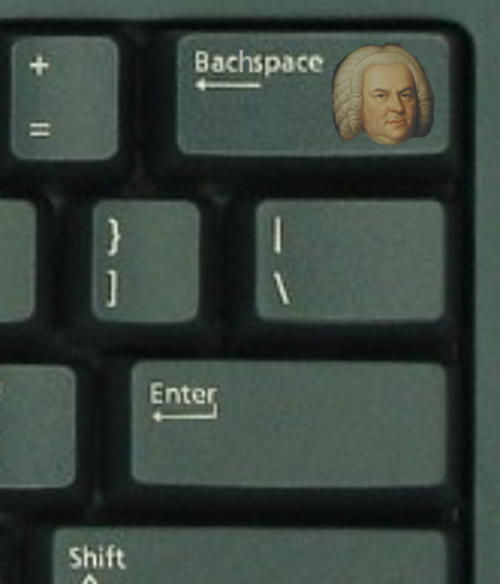
Another great thing about Bach is the inspiration he gives to lame puns.
Here is a common frustration among keyboardists:
If you have no idea that was about, I introduce the fugue. It is typically a musical form that harmonically elaborates on two themes with independent melodic lines. Bach was a master of the keyboard fugue. Is playing two simultaneous melodies too much for you? Is three? Here I play four in Fugue no. 7 in E flat major. That is two and a half fingers for each voice (Bach wrote a five part fugue too.. wonder how that works. Two fingers for each voice?).
0:01 first voice enters
0:11 second voice enters
0:22 third voice enters
0:34 fourth voice enters
0:52 two voices
0:57 four voices
1:06 three voices
1:31 four voices
If my rendition sounds a little too choppy for your taste, I can assure you that quirky articulation is better than none at all. Baroque highly valued originality in their performances where each playing would not have the exact same flow and embellishment.
There is a misconception that since little or no expressive details are specified on Baroque manuscripts, it means that they should be played mechanically. Actually, uniformness is so abhorred that it is common sense not to play that way, and therefore it is not specifically written. It was common knowledge to play with articulation, timbre, malleable tempo, and even improvisations.
The Art of Fugue is one of Bach's last works, which he left uncompleted due to his death. It contains fourteen fugues and four canons based on this one theme:
The fugue approach is much different from music after Mozart in that it varies the theme with many harmonies, whereas more modern music varies the harmony with many themes. I like to think that Bach's music is not so much about what is being said, but rather how something can be said.
I do not have Bach for breakfast, which explains why I am not the best musician~
All musicians ought to play Bach, whether for classical, contemporary, or pop. The best musicians have Bach for breakfast. Not only is the technique widely applicable, but his composition is also the epitome of well applied music theory.
Here is an amateur rendition of Violin Partita no. 2 in d minor: Allemande. Reading off a PDF here, and worried about knocking the table. Even in monophony, harmony is established through chord outlining.
Part I
0:00 ~ 0:36 (establish d minor)
0:36 ~ 1:17 (transition to a minor, with a Picardy third)
Part II
1:21 ~ 1:53 (transition to g minor)
1:53 ~ 2:42 (return to d minor)
Even breaking down the harmonic movements this way, there are more complexities between each base. Most laypeople lose track and get "lost", and quickly bored. No worries, it is understandable. It takes some training to not get overwhelmed.
I like to think of fugues as "pure music". There is no lyrical, literary, nor occasional context attached to it. There is not even a title to give a clue. The beauty is in the movement of the piece itself, its tensions and resolutions between the voices, their overlapping and complementing. A modern person is more used to music packed with interesting melodies, but the invention, sinfonia, and fugue utilize minimal starting material and expand it to its fullest potential.
Another great thing about Bach is the inspiration he gives to lame puns.
Here is a common frustration among keyboardists:
If you have no idea that was about, I introduce the fugue. It is typically a musical form that harmonically elaborates on two themes with independent melodic lines. Bach was a master of the keyboard fugue. Is playing two simultaneous melodies too much for you? Is three? Here I play four in Fugue no. 7 in E flat major. That is two and a half fingers for each voice (Bach wrote a five part fugue too.. wonder how that works. Two fingers for each voice?).
0:01 first voice enters
0:11 second voice enters
0:22 third voice enters
0:34 fourth voice enters
0:52 two voices
0:57 four voices
1:06 three voices
1:31 four voices
If my rendition sounds a little too choppy for your taste, I can assure you that quirky articulation is better than none at all. Baroque highly valued originality in their performances where each playing would not have the exact same flow and embellishment.
There is a misconception that since little or no expressive details are specified on Baroque manuscripts, it means that they should be played mechanically. Actually, uniformness is so abhorred that it is common sense not to play that way, and therefore it is not specifically written. It was common knowledge to play with articulation, timbre, malleable tempo, and even improvisations.
The Art of Fugue is one of Bach's last works, which he left uncompleted due to his death. It contains fourteen fugues and four canons based on this one theme:
The fugue approach is much different from music after Mozart in that it varies the theme with many harmonies, whereas more modern music varies the harmony with many themes. I like to think that Bach's music is not so much about what is being said, but rather how something can be said.
I do not have Bach for breakfast, which explains why I am not the best musician~
Elements and Principles of Music
Recommended prerequisite: art 1, physics
Hopefully this posts helps people learn music.. without learning music!
pitch - hue
timbre - saturation
dynamics - value
chord - colour
key - colour scheme
wheel of fifths - colour wheel
tritone - complementary colour
In terms of waves, pitch and hue correspond to frequency. The superposition of waves cause constructive and destructive interferences, creating distinct timbre and saturation (but timbre is less customizable than saturation, since it is a uniquely built in characteristic for each instrument). The amplitude of a wave is to dynamics and value.
A chord is a mixture of pitches like colour a mixture of hues, although not so much timbre and dynamics. A key tells what set of pitches and chords to use. The wheel of fifths describes relationships between chords as a colour wheel describes relationships between colours. A tritone is two pitches that make a lot of destructive interference (like complementary colours, two colours that decrease saturation) and has a lot of tension.
rhythm - pattern
meter - rhythm
rest - space
A meter cannot exist without a rhythm, as rhythm cannot exist without pattern (whut, confused?). Say in musical terms, you have this rhythm: ∆∆∆∆∆∆. With the same rhythm, you can create different meters such as ∆∆ ∆∆ ∆∆ and ∆∆∆ ∆∆∆, or even ∆ ∆∆ ∆∆∆ (although not common). Another example with ∆∆∆∆ is ∆ ∆ ∆ ∆ and ∆∆ ∆∆. Rest is simply a "nothingness".
texture - balance
articulation - texture
motif - shape
theme - form
structure - layer
melody - figure
accompaniment - background
instrument - medium
Texture is the relation between voices, regarding their distance and relative motion. Articulation is to texture, since you can make flaky textures with peppery notes and flowing textures with streaming notes. A motif is less than a theme, as a shape is a little less than a form, but a motif can still be a subject. A theme is more complete than a motif, as a form has more details that distinguishes itself from a shape. The structure describes the layers in piece of music, what comes first and next. An accompaniment is the backdrop for a melody.
There does not seem to be an equivalent for beat and tempo, as far as my little brain knows. The beat is a pretend drum that continuously taps the tempo, the speed of the music.
Even if you do already know these things, keep in mind that the best musician tries to exploit as many elements as possible. Noting these elements gives a handhold at expressing the idiosyncrasies of a piece. It is key to being an exceptional performer!
Hopefully this posts helps people learn music.. without learning music!
pitch - hue
timbre - saturation
dynamics - value
chord - colour
key - colour scheme
wheel of fifths - colour wheel
tritone - complementary colour
In terms of waves, pitch and hue correspond to frequency. The superposition of waves cause constructive and destructive interferences, creating distinct timbre and saturation (but timbre is less customizable than saturation, since it is a uniquely built in characteristic for each instrument). The amplitude of a wave is to dynamics and value.
A chord is a mixture of pitches like colour a mixture of hues, although not so much timbre and dynamics. A key tells what set of pitches and chords to use. The wheel of fifths describes relationships between chords as a colour wheel describes relationships between colours. A tritone is two pitches that make a lot of destructive interference (like complementary colours, two colours that decrease saturation) and has a lot of tension.
rhythm - pattern
meter - rhythm
rest - space
A meter cannot exist without a rhythm, as rhythm cannot exist without pattern (whut, confused?). Say in musical terms, you have this rhythm: ∆∆∆∆∆∆. With the same rhythm, you can create different meters such as ∆∆ ∆∆ ∆∆ and ∆∆∆ ∆∆∆, or even ∆ ∆∆ ∆∆∆ (although not common). Another example with ∆∆∆∆ is ∆ ∆ ∆ ∆ and ∆∆ ∆∆. Rest is simply a "nothingness".
texture - balance
articulation - texture
motif - shape
theme - form
structure - layer
melody - figure
accompaniment - background
instrument - medium
Texture is the relation between voices, regarding their distance and relative motion. Articulation is to texture, since you can make flaky textures with peppery notes and flowing textures with streaming notes. A motif is less than a theme, as a shape is a little less than a form, but a motif can still be a subject. A theme is more complete than a motif, as a form has more details that distinguishes itself from a shape. The structure describes the layers in piece of music, what comes first and next. An accompaniment is the backdrop for a melody.
There does not seem to be an equivalent for beat and tempo, as far as my little brain knows. The beat is a pretend drum that continuously taps the tempo, the speed of the music.
Even if you do already know these things, keep in mind that the best musician tries to exploit as many elements as possible. Noting these elements gives a handhold at expressing the idiosyncrasies of a piece. It is key to being an exceptional performer!
Monday, 31 August 2015
Runescape
Prerequisite: none
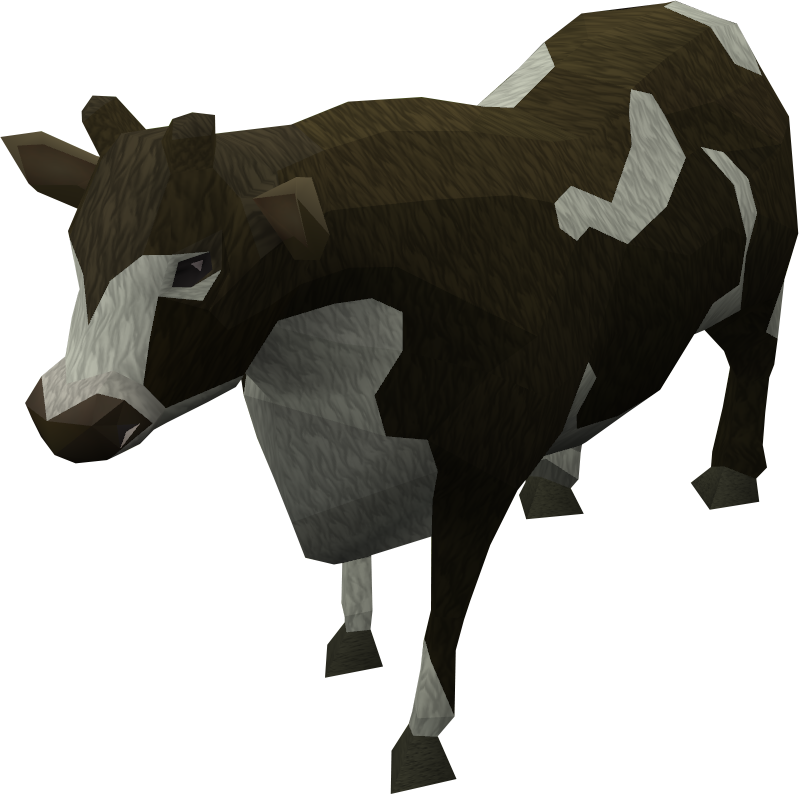
Yup, I played Runescape back in 2006. My account has a combat level 90, total level 1220, and some 10 mil. gp in the bank. That is a lot of time spent (no life, hurhur). And moving away from childhood, there is simply not enough time. My commitment lies elsewhere. It has been almost ten years since I started, and some six years since I stopped playing regularly.
Occasionally I would skim the updates, and if something looks interesting I might log in. Sadly, I am not a child anymore and it takes much more to amuse me.
It sounds like the game is receiving lots of bashing recently. I think it is only a matter of growing up. Players have grown and grown out of the game, as a child would grow out children's clothes. Some things were great in childhood, such as Harry Potter. Heck, Harry Potter used to be the best thing evaaar. As a kid there was so much to marvel at. Then the novelty dies out. Only the nostalgia remains.
Will I still play it? No.
Is Runescape a lame game? No.
Did the enchantment wear off? Pretty much. Ya.
Having sacrificed so much time exploring a virtual world, what have I gained? Were my efforts wasted? Was the game worth it? Although I am not known for gaming, I know for a fact that many things had stayed with me.
1) Vocabulary
I boosted my vocabulary terrifically through playing Runescape, being a foreign English speaker. I know the ores from copper to gold (as well as the fictional ores). I know the fish from crayfish to swordfish. I know the trees from oak to yew. I know the folk from barbarian to knight. I know the creatures from goblin to dragon. What is mithril? What is a pike? Where are willows found? What does the apothecary do? What is the difference between a ghost and a revenant (besides that one is mightily stronger than the other)?
How else should I know everything from dagger to longsword, rapier to maul, mace to battleaxe, boots to vambraces? What is the difference between a platebody and a chainbody? A coif and a cowl? What is so distinct about the scimitar? Oh, scimitars..
Most players probably do not bother with the "examine" function, but I examined everything. The thistles on the grass. The ducklings in the river. The mushroom by a rock. The rock itself. I know the difference between a stalagmite and a stalactite. A fern and a shrub. Wheat and grain. I could go on forever..
Ya, the kind of thing I do..
2) Technology
Never will I forget that Cu (copper) and Sn (tin) make bronze. Ever. Or that Fe (iron) and carbon (coal) make steel. Or that alloys with higher carbon (coal) content make sturdier metals. Or that impurities can exist in ores, and cause the iron bar you are smelting to fail. Imagine my delight when I came across these details in AP chemistry.
If you played Runescape, you know a thing or two about ore mining, bar smelting, spear fishing, gem cutting, leather tanning, flour milling, dairy churning, and possibly to your expense, scamming (not a technology, but ya).
3) Just.. things
What does it mean to "blow a raspberry"? What is a kebab? What are runes anyway? And of course there is plenty of nonsense logic as well.
Maybe that is the most important thing I learned from Runescape. Got to embrace every waking moment. That XP is going to make a difference. So get out of that virtual world and get some real life XP.. and become some real life skill master. Unless you want to stay a noob.
Yup, I played Runescape back in 2006. My account has a combat level 90, total level 1220, and some 10 mil. gp in the bank. That is a lot of time spent (no life, hurhur). And moving away from childhood, there is simply not enough time. My commitment lies elsewhere. It has been almost ten years since I started, and some six years since I stopped playing regularly.
Occasionally I would skim the updates, and if something looks interesting I might log in. Sadly, I am not a child anymore and it takes much more to amuse me.
It sounds like the game is receiving lots of bashing recently. I think it is only a matter of growing up. Players have grown and grown out of the game, as a child would grow out children's clothes. Some things were great in childhood, such as Harry Potter. Heck, Harry Potter used to be the best thing evaaar. As a kid there was so much to marvel at. Then the novelty dies out. Only the nostalgia remains.
Will I still play it? No.
Is Runescape a lame game? No.
Did the enchantment wear off? Pretty much. Ya.
Having sacrificed so much time exploring a virtual world, what have I gained? Were my efforts wasted? Was the game worth it? Although I am not known for gaming, I know for a fact that many things had stayed with me.
1) Vocabulary
I boosted my vocabulary terrifically through playing Runescape, being a foreign English speaker. I know the ores from copper to gold (as well as the fictional ores). I know the fish from crayfish to swordfish. I know the trees from oak to yew. I know the folk from barbarian to knight. I know the creatures from goblin to dragon. What is mithril? What is a pike? Where are willows found? What does the apothecary do? What is the difference between a ghost and a revenant (besides that one is mightily stronger than the other)?
How else should I know everything from dagger to longsword, rapier to maul, mace to battleaxe, boots to vambraces? What is the difference between a platebody and a chainbody? A coif and a cowl? What is so distinct about the scimitar? Oh, scimitars..
Most players probably do not bother with the "examine" function, but I examined everything. The thistles on the grass. The ducklings in the river. The mushroom by a rock. The rock itself. I know the difference between a stalagmite and a stalactite. A fern and a shrub. Wheat and grain. I could go on forever..
Ya, the kind of thing I do..
2) Technology
Never will I forget that Cu (copper) and Sn (tin) make bronze. Ever. Or that Fe (iron) and carbon (coal) make steel. Or that alloys with higher carbon (coal) content make sturdier metals. Or that impurities can exist in ores, and cause the iron bar you are smelting to fail. Imagine my delight when I came across these details in AP chemistry.
If you played Runescape, you know a thing or two about ore mining, bar smelting, spear fishing, gem cutting, leather tanning, flour milling, dairy churning, and possibly to your expense, scamming (not a technology, but ya).
3) Just.. things
What does it mean to "blow a raspberry"? What is a kebab? What are runes anyway? And of course there is plenty of nonsense logic as well.
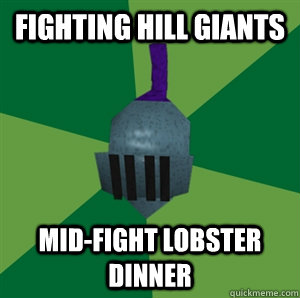
And the things I may have encountered too soon for my age..
And the music. Although the MIDI is awful, the composition is very something. The modality really brings out the European medieval setting. It is nice to hear something else for a change that is not Ionian or Aeolian. I recognize some Lydian, Dorian, and Phrygian..
Just things.
I had gleaned all I could from the game. There is nothing more for me in that bubble. Headed back to reality ever since and called it an experience. 10,051,749 XP to be precise.
Really feeling this way (in real life) throughout high school life and towards university:
Maybe that is the most important thing I learned from Runescape. Got to embrace every waking moment. That XP is going to make a difference. So get out of that virtual world and get some real life XP.. and become some real life skill master. Unless you want to stay a noob.
Sunday, 23 August 2015
Neumes
Recommended prerequisite: music theory
For most people Bach is the oldest composer on their repertoire, who lived somewhere between the 1600s into the 1700s. In the mainstream the oldest things out there are probably Vivaldi or Pachelbel. There is nothing wrong with that. It is understandable that fairly modern techniques are not directly transferrable to the Baroque music style.
But this post is not about Baroque music (which is another story to itself). What if I told you that before Bach, even before the Renaissance, their music was written with square notes?
These square notes are neumes. Notice that there are four staff lines instead of five.. and there are no definite measures or tempo. Is this notation outdated, antiquated, primitive, or what? No, this comes to the same issue as Baroque music: the style is simply different.
For most people Bach is the oldest composer on their repertoire, who lived somewhere between the 1600s into the 1700s. In the mainstream the oldest things out there are probably Vivaldi or Pachelbel. There is nothing wrong with that. It is understandable that fairly modern techniques are not directly transferrable to the Baroque music style.
But this post is not about Baroque music (which is another story to itself). What if I told you that before Bach, even before the Renaissance, their music was written with square notes?
These square notes are neumes. Notice that there are four staff lines instead of five.. and there are no definite measures or tempo. Is this notation outdated, antiquated, primitive, or what? No, this comes to the same issue as Baroque music: the style is simply different.
This notation was often used for plainchant sung in churches. More important to understand is the purpose of plainchant. It was not so much for public performance than for personal prayer. Those European cathedrals had very deep echoes, so sounds delayed, overlapped and bounced back. In that environment there was no need for precise rhythmic notation.
Another quirk about neumes: there is no specified starting pitch. You get to sing with whatever "key" you like. Notice that four staff lines just about spans one octave, which is the average vocal range.
Brilliant. How to sing it?
An Idiot's Guide to Square Notes tells you everything you need to know! In fact it explains better than I can. I like how it explains that you would not notate a symphony with neumes any more than you would a Gregorian chant with modern notation, because the styles require different approaches. The two notations were even invented by the same person. Hur hur.
For a feel of how it sounds: https://www.youtube.com/watch?v=pqDIEjQfdNk
Why are neumes not getting much attention? Perhaps the religious background makes people wary? What I am more interested in is how this style of notation can change our mentalities towards music. Is there some potential we can rediscover from the freedom neumes provide?
Brilliant. How to sing it?
An Idiot's Guide to Square Notes tells you everything you need to know! In fact it explains better than I can. I like how it explains that you would not notate a symphony with neumes any more than you would a Gregorian chant with modern notation, because the styles require different approaches. The two notations were even invented by the same person. Hur hur.
For a feel of how it sounds: https://www.youtube.com/watch?v=pqDIEjQfdNk
Why are neumes not getting much attention? Perhaps the religious background makes people wary? What I am more interested in is how this style of notation can change our mentalities towards music. Is there some potential we can rediscover from the freedom neumes provide?
Saturday, 22 August 2015
G Flute
Recommended prerequisite: music theory, physics
Four months ago I made a G flute from a flagstick.
This calculator takes care of drilling details: http://11wall-west.com/~ph_kosel/flutomat.html. These are the measurements I used:
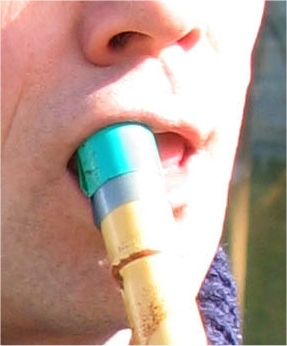
The holes I made are ugly.. punctured with a sewing needle then “dug” out with pencil and scissors. There is no mouthpiece. The end is just flat like a straw. It is almost the same way ancient people put six holes into a segment of reed from a riverbank.
The way woodwind works is the stream of air must split in half. The recorder is easiest to play since the design splits the air for you. The modern flute is a little harder since you must aim at the edge (or maybe not, I never played one). As for my straw-like flute, it is quite something else..
The sounding concept of my flat brim flute is pretty much like a ney, which I learned from here: http://www.neyzen.com/ney_metodu.html. The technique is veeeeery hard. You are somehow supposed to split your airstream on the flat brim. A subtle twitch in lip shape, ney angle, or tongue placement is enough to extinguish the sound. As you can see I only managed three notes (D, E, F#) after trying for three months:
By the way, there is another sounding technique which requires wedging the edge between your two front teeth and hissing like a viper.. This Persian method creates a unique tone, but no thanks. The Arabic/Turkish method I am using is difficult enough.
Really, during the first three months I only produced air and wispy harmonics. As you may or may not have known from A Cringeworthy Process, I a not one to give up so quickly. This is recently, my fourth month trying:
I achieved two extra notes by overblowing the D and E to get their perfect fifths A and B. The fingerings are the same, but the stronger breath makes the second harmonic (perfect fifth) ring. For some insight to how it works, refer to Harmonic Intervals and Resonance and Timbre and Overtones. I can manage overblown octaves as well, but my breath transition needs some attention first. It is generally not recommended that I learn so many notes before mastering the sound quality.. still working on it!
How was the first flute inspired? My guess is an observation of wind flowing through an empty log. But from this flutemaking experience I find that flat brimmed flutes are really hard to play. Even after making the flute, it takes three months' effort to produce a sound (perhaps even longer for the first flutist ever, since there are no preceding flutists to teach the first). Either ancient people had nothing better to do, or they were increeeeedibly smart. I think they actually were smart.
Five notes (D, E, F#, A, B) is enough to play a couple songs but let me work my intonation first. Then I might play you something decent..
Four months ago I made a G flute from a flagstick.
This calculator takes care of drilling details: http://11wall-west.com/~ph_kosel/flutomat.html. These are the measurements I used:
The holes I made are ugly.. punctured with a sewing needle then “dug” out with pencil and scissors. There is no mouthpiece. The end is just flat like a straw. It is almost the same way ancient people put six holes into a segment of reed from a riverbank.
The way woodwind works is the stream of air must split in half. The recorder is easiest to play since the design splits the air for you. The modern flute is a little harder since you must aim at the edge (or maybe not, I never played one). As for my straw-like flute, it is quite something else..
The sounding concept of my flat brim flute is pretty much like a ney, which I learned from here: http://www.neyzen.com/ney_metodu.html. The technique is veeeeery hard. You are somehow supposed to split your airstream on the flat brim. A subtle twitch in lip shape, ney angle, or tongue placement is enough to extinguish the sound. As you can see I only managed three notes (D, E, F#) after trying for three months:
By the way, there is another sounding technique which requires wedging the edge between your two front teeth and hissing like a viper.. This Persian method creates a unique tone, but no thanks. The Arabic/Turkish method I am using is difficult enough.
Really, during the first three months I only produced air and wispy harmonics. As you may or may not have known from A Cringeworthy Process, I a not one to give up so quickly. This is recently, my fourth month trying:
I achieved two extra notes by overblowing the D and E to get their perfect fifths A and B. The fingerings are the same, but the stronger breath makes the second harmonic (perfect fifth) ring. For some insight to how it works, refer to Harmonic Intervals and Resonance and Timbre and Overtones. I can manage overblown octaves as well, but my breath transition needs some attention first. It is generally not recommended that I learn so many notes before mastering the sound quality.. still working on it!
How was the first flute inspired? My guess is an observation of wind flowing through an empty log. But from this flutemaking experience I find that flat brimmed flutes are really hard to play. Even after making the flute, it takes three months' effort to produce a sound (perhaps even longer for the first flutist ever, since there are no preceding flutists to teach the first). Either ancient people had nothing better to do, or they were increeeeedibly smart. I think they actually were smart.
Five notes (D, E, F#, A, B) is enough to play a couple songs but let me work my intonation first. Then I might play you something decent..
Labels:
culture,
informative,
inspirational,
instructional,
music,
physics,
technology
Friday, 14 August 2015
Timbre and Overtones
Followup of Harmonic Intervals and Resonance
Prerequisites: physics, music theory
Common misconception: play an A on the violin and the frequency is 440 Hz.
Almost true.
Most sounds are actually a blend of many frequencies above the fundamental frequency. Timbre, or colour, is the difference in harmonic distribution that gives each musical instrument its own distinct sound. Timbre can also vary between each person's voice, or subtly between each violin.
Recall the formula f = n*(v/2L) where
f = frequency
n = harmonic number
v = speed of sound
l = length of string or open pipe
and the fundamental frequency is when n = 1
Here is what I mean by "a blend of many frequencies". The higher frequencies are harmonics. The fundamental is most amplified and so the most noticeable.
This reminds me of overtone singing (if you have no idea what that is: https://www.youtube.com/watch?v=7zZainT9v6Q). The funny whistling sound are overtones , or harmonics, and the lowest note is the fundamental. Frequency ratios early in the harmonic series are easier to produce than ratios further down the series. Meaning, consonant intervals have stronger resonance from constructive interference, while dissonant intervals sound fainter from destructive interference.
Not all of us regard the human body as a musical instrument. There are many hollows in the human body that allow strong vibration, which is needed for harmonics to be noticeable at all. Resonance is not only established with others, but with the self as well when you let your other harmonics ring. Maybe not necessarily to produce overtones, but to build a richer timbre.
Consider the fact that organisms are designed according to their functions. What function does singing serve humans? Why is music even a thing? For me, music is more than an art or a recreation. There is something transcendental about the way music works. I am still figuring things out here..
Prerequisites: physics, music theory
Common misconception: play an A on the violin and the frequency is 440 Hz.
Almost true.
Most sounds are actually a blend of many frequencies above the fundamental frequency. Timbre, or colour, is the difference in harmonic distribution that gives each musical instrument its own distinct sound. Timbre can also vary between each person's voice, or subtly between each violin.
Recall the formula f = n*(v/2L) where
f = frequency
n = harmonic number
v = speed of sound
l = length of string or open pipe
and the fundamental frequency is when n = 1
Here is what I mean by "a blend of many frequencies". The higher frequencies are harmonics. The fundamental is most amplified and so the most noticeable.
This reminds me of overtone singing (if you have no idea what that is: https://www.youtube.com/watch?v=7zZainT9v6Q). The funny whistling sound are overtones , or harmonics, and the lowest note is the fundamental. Frequency ratios early in the harmonic series are easier to produce than ratios further down the series. Meaning, consonant intervals have stronger resonance from constructive interference, while dissonant intervals sound fainter from destructive interference.
Not all of us regard the human body as a musical instrument. There are many hollows in the human body that allow strong vibration, which is needed for harmonics to be noticeable at all. Resonance is not only established with others, but with the self as well when you let your other harmonics ring. Maybe not necessarily to produce overtones, but to build a richer timbre.
Consider the fact that organisms are designed according to their functions. What function does singing serve humans? Why is music even a thing? For me, music is more than an art or a recreation. There is something transcendental about the way music works. I am still figuring things out here..
Thursday, 13 August 2015
Harmonic Intervals and Resonance
Prerequisites: physics, algrebra 2, music theory
Polyphony is a sweet phenomenon, even if in physics it just means that two sound waves overlap each other. The first few frequency ratios in the harmonic series sound consonant (stable), and the ratios further along sound more dissonant (unstable).
harmonic series: (n)/(n+1)
Here I have the ratios graphed out next to its counterpart notation in music theory (I flipped the fractions just because it is easier for me to visualize). The dashed line is the resultant wave of superpositioning the two waves. Not be confused with the musical term, the physics term for that gross fluctuating amplitude is beat (and that, my fellow string ensemble mates, is how you can tell whether your strings are slightly out of tune).
Recall that amplitude corresponds to volume, and period corresponds to frequency.
These things are indeed taught at school, but no teacher strings them together this way. You may have heard that music and maths are related (now you know it means more than counting beats). This is only one of the examples.
And no, my point does not end here.
Playing in an orchestra or singing in a choir is a humbling experience. According to how resonance works, playing off pitch can cause interferences, decrease the amplitude where waves cancel out each other, and make beats (the physics term). In order to achieve resonance, everyone has to listen to each other and blend in.
Harmony, literally.
Polyphony is a sweet phenomenon, even if in physics it just means that two sound waves overlap each other. The first few frequency ratios in the harmonic series sound consonant (stable), and the ratios further along sound more dissonant (unstable).
harmonic series: (n)/(n+1)
Here I have the ratios graphed out next to its counterpart notation in music theory (I flipped the fractions just because it is easier for me to visualize). The dashed line is the resultant wave of superpositioning the two waves. Not be confused with the musical term, the physics term for that gross fluctuating amplitude is beat (and that, my fellow string ensemble mates, is how you can tell whether your strings are slightly out of tune).
Recall that amplitude corresponds to volume, and period corresponds to frequency.
And what about superpositioning the same pitch? If you think about it, the resultant wave is just double the amplitude while maintaining the same shape. When sound waves overlap in a way that amplifies itself nicely, it makes resonance. Consonances are more resonant than dissonances.
These things are indeed taught at school, but no teacher strings them together this way. You may have heard that music and maths are related (now you know it means more than counting beats). This is only one of the examples.
And no, my point does not end here.
Playing in an orchestra or singing in a choir is a humbling experience. According to how resonance works, playing off pitch can cause interferences, decrease the amplitude where waves cancel out each other, and make beats (the physics term). In order to achieve resonance, everyone has to listen to each other and blend in.
Harmony, literally.
Subscribe to:
Posts (Atom)